Small crab into the corals @Mafia Island - Tanzania ©Andrea Pompele All Rights Reserved

Small crab into the corals @Mafia Island - Tanzania ©Andrea Pompele All Rights Reserved
Visualizzazione post con etichetta dreams. Mostra tutti i post

lunedì 16 novembre 2015

Africa, the mother land: Tanzania.LA TEMPESTA / A BIG STORM IN THE SKY

Sono le 7 del mattino.  Fa caldo, fa molto caldo. Il sole sembra bruciare la terra e la pelle, ed io cerco l’ombra della tenda mentre faccio colazione all’aperto come tutte le mattine. Non c’è un alito di vento. 
cloudysky tanzania ruaha mdonya
The cloudy sky - Ruaha National Park - Tanzania  ©Andrea Pompele All Rights Reserved
La temperatura raggiungerà 36 gradi all’ombra in ufficio, come mi accorgerò più tardi guardando la nostra mini stazione meteo, sotto il sole la differenza è notevole, probabilmente 42. Il tasso di umidità è basso, quindi è comunque sopportabile. 

La mattina si prospetta interessante, mi alzo sempre presto intorno alle 6 e mi sveglio ancora prima verso le 5:30, è ancora buio ma la luce filtra dall’orizzonte e non ho bisogno della torcia. I leoni sono vicini e li sento ruggire. 


dawn bush tanzania ruaha mdonya
Dawn in the bush - Ruaha National Park
Tanzania  
©Andrea Pompele All Rights Reserved

La scorsa notte due leopardi, un maschio ed una femmina, hanno attraversato il campo. Gli ospiti erano andati a dormire presto e la mia collega anche, i Maasai sono andati nelle loro tende e mi hanno salutato, dopo aver spento le lanterne a kerosene, sono rimasto solo davanti al fuoco ad ascoltare i rumori della notte e a guardare le stelle.  È uno spettacolo a cui non si può rinunciare, alla fine vivo in un posto meraviglioso, devo approfittarne no? “Eh sì, come se non lo facessi tutti i giorni!” “sì in effetti, non posso certo lamentarmi, assito a scene incredibili e sempre diverse” “appunto”. 
Night sky ruaha mdonya tanzania
Night skyRuaha National Park - Tanzania  ©Andrea Pompele All Rights Reserved

Torniamo a noi senza divagare troppo: i babbuini che dormono sugli alberi di fronte all’area comune del campo cominciarono a lanciare richiami di allarme, sempre più forti e continui, gli impala che brucano nel letto del fiume in secca risposero con altrettanti soffi, qualcosa li spaventò e io so cosa: un leopardo. Accesi la torcia e la punto in direzione dei cespugli, nulla, cambiai direzione, puntai la luce nel corso del fiume ed illuminai due occhi arancioni che mi guardarono, l’animale si spostò e la silhouette è quella di un felino. Ah l’avevo detto io che c’era un leopardo, ahahaha! “guarda meglio per favore e non fermarti alla prima occhiata, te lo dico sempre” lo seguì con lo sguardo e mi spostai sotto la tenda anticipando la direzione del suo percorso, stava attraversando il campo, c’era abbastanza luce per poterlo vedere bene e si diresse verso la tenda n4, quella più vicina a me. Con mia grande sorpresa i leopardi erano 2, un maschio ed una femmina che lo seguì, andarono direttamente a bere alla pozza. 


male leopard ruaha tanzania mdonya
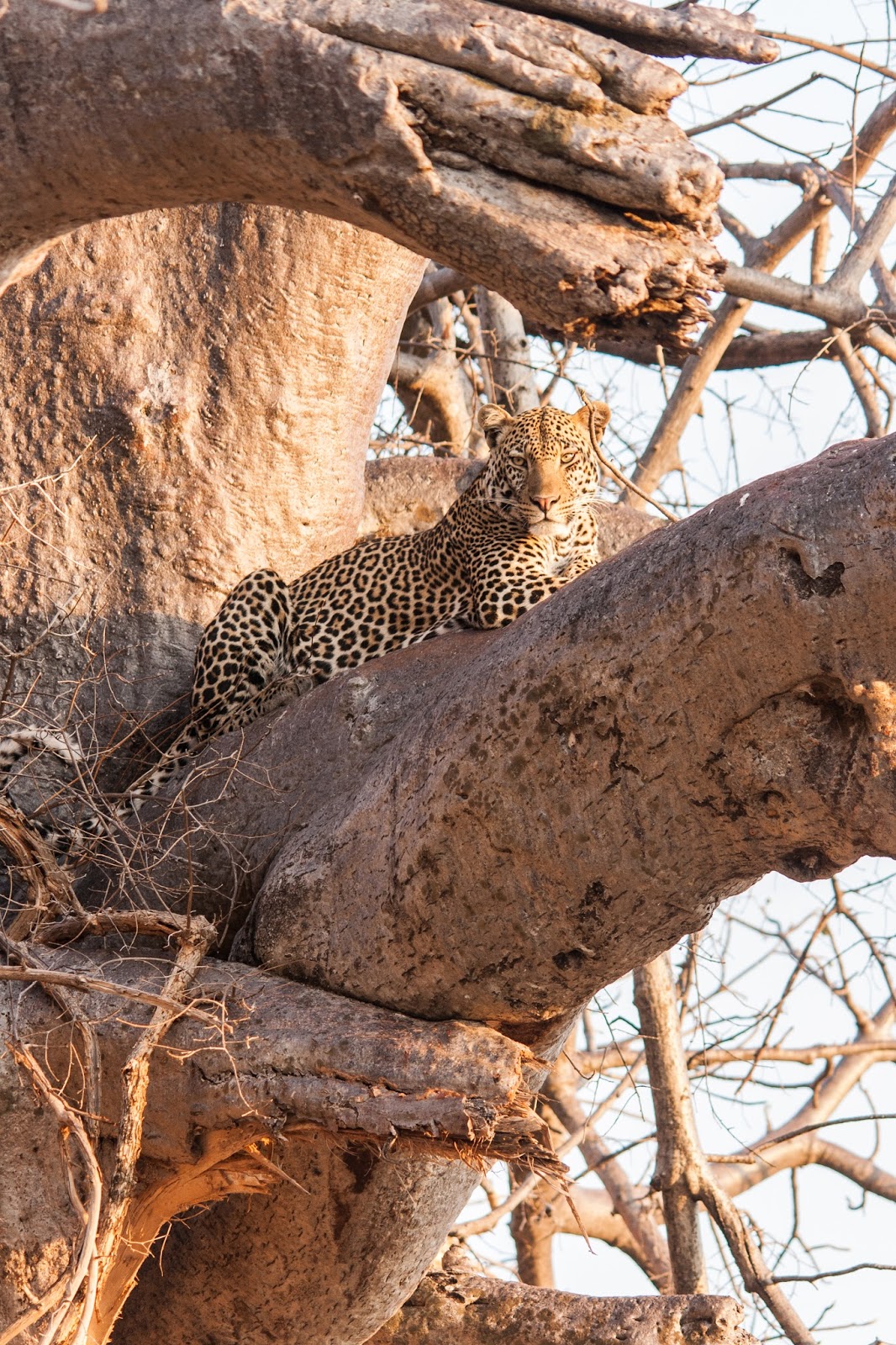
Male leopard on a Baobab tree 
- Ruaha National Park - Tanzania  
©Andrea Pompele All Rights Reserved
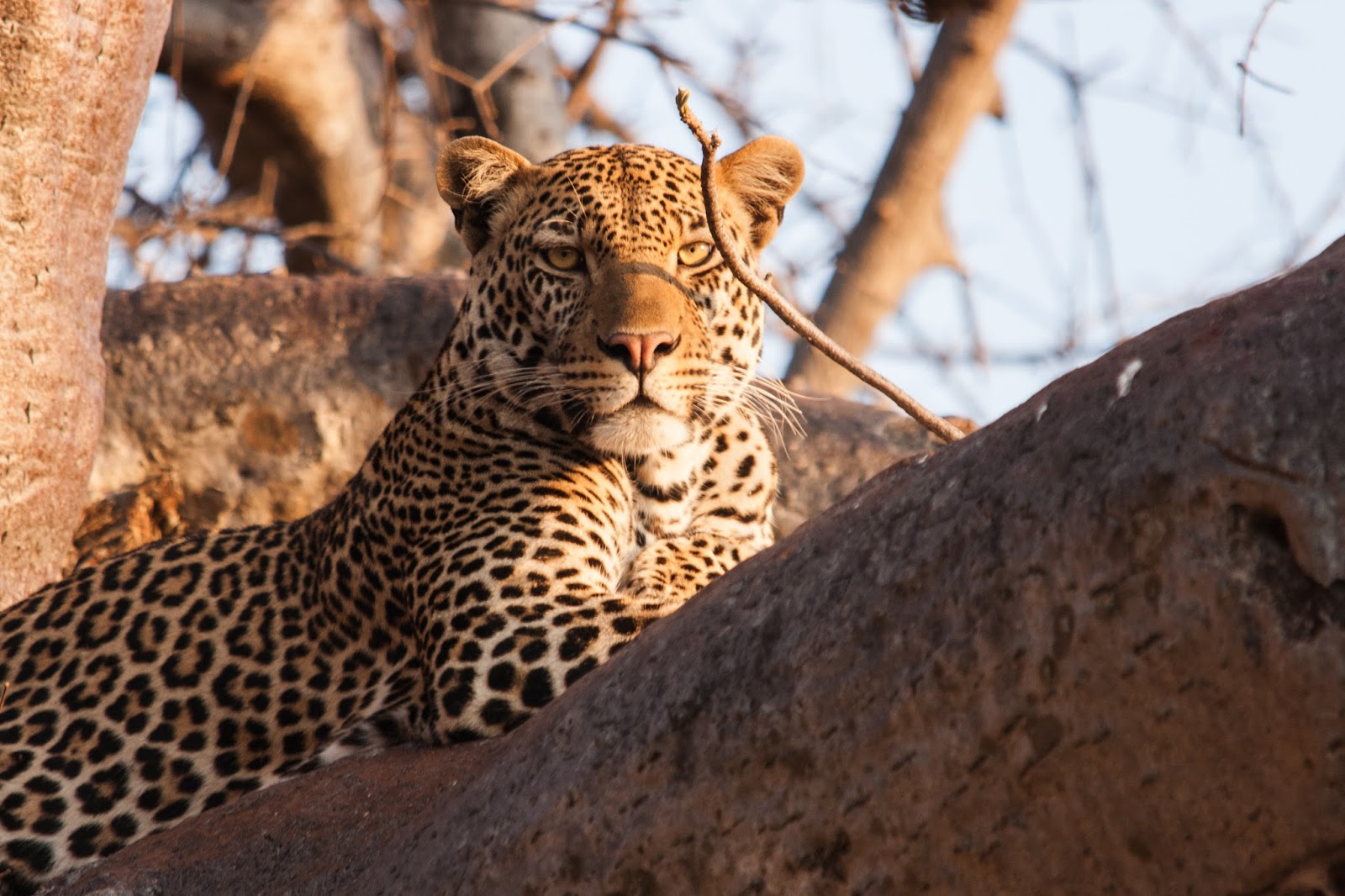
Questa mattina ho voglia di trovare i due leopardi, io e la mia collega prendiamo la macchina e andiamo a fare una perlustrazione intorno al campo, sono le 5:45 vediamo le tracce sulla strada che costeggia la collina e le seguiamo fino al punto panoramico dove di solito prendiamo l’aperitivo con gli ospiti, la strada è una salita non troppo lunga in mezzo ai cespugli che si apre in cima con 3 maestosi Babobab in fiore, la primavera è arrivata. Su uno di questi immensi alberi, il più grande in effetti, qualcosa si muove. Il maschio si sposta sul ramo più robusto e si sdraia a prendere i primi raggi del sole, parcheggiamo la macchina in mdo da avere la vista migliore e scattiamo delle foto, non c’è ombra della femmina. Spendiamo un’oretta circa a goderci la miglior luce possibile per fotografare il predatore e poi torniamo al campo a fare colazione. Non male come inizio di giornata vero?

Dicevo fa caldo, molto caldo. Il cielo è sereno e la mattinata scorre in fretta. L’umidità aumenta e si alza una leggera brezza che tutto sommato è piacevole, ti fa scordare per un attimo che ci sono 33 gradi la mattina. Durante l’ora di pranzo appaiono nuvole come panna montata nel cielo azzurro intenso, il paesaggio è incredibile. Bella giornata, penso, proprio bella.
male leopard ruaha tanzania mdonya
Male leopard on a Baobab tree - Ruaha National Park - Tanzania  ©Andrea Pompele All Rights Reserved
4:00 del pomeriggio, la radio ci annuncia l’arrivo di alcuni clienti, ci prepariamo ad accoglierli nel parcheggio sterrato. Il vento aumenta e le nuvole si ingrigiscono, fino a diventare nere e cariche di pioggia, tuoni in lontananza e fulmini annunciano la tempesta. Non penso pioverà nel campo, ieri alla fine ha piovuto sulle colline, probabilmente passerà sopra le nostre teste e scaricherà l’acqua sopra la grande scarpata. 

Mi sbaglio. E di brutto anche. 

La mia collega arriva con un giacchetta impermeabile e due ombrelli, io decido di andare a prendere la mia nella mia tenda, tempo di andare e tornare nel parcheggio, circa 3 min e comincia a piovere. 

La pioggia nella savana è una benedizione specialmente alla fine della stagione secca, ma quando piove, piove sul serio. 
storm sky ruaha tanzania mdonya
A big storm in the sky - Mdonya Old River Camp - Ruaha National Park - Tanzania  ©Rebecca Phillips All Rights Reserved

I clienti sono scesi dalle macchine e sono sotto la lounge tent si prendono giusto due gocce, io sono l’ultimo e devo finire di aiutare la guida e il driver a chiudere la macchina sui lati in modo che non ci piova dentro, in un minuto il parcheggio diventa un lago i sentieri che portano all’ufficio e alla zona comune diventano fiumiciattoli in piena, butto via le ciabatte che tanto non servono a niente e mi dirigo a alla dining tent dove la mia collega e lo staff stanno chiudendo i lati. 
Cominciamo a ridere come imbecilli mentre le secchiate di acqua in faccia piovono dal cielo, sono completamente fradicio ormai quindi che cavolo mi preoccupo a fare? 
I clienti sono nelle loro tende e non ci sente nessuno con tutti questi tuoni, allora una bella corsetta sotto la pioggia a celebrare l’arrivo dell’acqua non me lo toglie nessuno no? 

Fulmini a tutto spiano e lampi che illuminano a giorno per qualche secondo e un’idiota che corre scalzo in mezzo al campo.

Molto professionale.

Ma divertentissimo.

Se vi è piaciuto questo articolo allora potreste essere interessati a lasciare un commento, oppure a leggere anche questi altri:


ENGLISH VERSION

It is 7am. It's hot, it's very hot! The sun seems to burn the earth and the skin, and I seek the shade of the tent while eating breakfast outdoors every morning. There is not a breath of wind.

The temperature will reach 36 degrees in the shade of the office as I will later realize upon checking our mini weather station so under the sun there is a big difference, probably reaching 42 degrees. The humidity is low so it is still bearable.

The morning looks interesting I always get up early around 6 and I wake up even earlier at 5:30, it is still dark but the light filters up from the horizon and I do not need a torch. Lions are nearby and hear them roaring.

Last night two leopards, one male and one female, have crossed the camp. The guests had gone to bed early and my colleague also the Maasai have gone in their tents having wished me a good night after turning off the kerosene lanterns and they left me alone around the fire listening to the sounds of the night and watching the stars. It is a show that you cannot miss. I live in a wonderful place I have to take advantage of it, don’t you think? "Yeah, as if you do every day!" "Yes indeed, I cannot complain, taking in amazing scenes and always different" "precisely".

Return to us not deviate too much : the baboons who sleep on the trees in front of the common area of ​​camp began to launch alarm calls more and more loudly and continuously, the impala grazing in the dry river bed responded with many snorts, something frightened them and I know what: a leopard. I turned on the flashlight and pointed in the direction of the bushes, nothing, I changed direction, pointed the light in the course of the river and I saw two shinning orange eyes that looked at me, the animal moved and the silhouette is that of a cat. Ah, I told you that there was a leopard, hahaha! "Look better and please do not stop at first glance, I always say that to you" I watched him and I moved under the lounge tent anticipating the direction of his movements, he was crossing the camp, there was enough light to see him well and he headed for the tent n4, the one closest to me. To my surprise there were two leopards, a male and a female who followed him went straight to the waterhole to drink.

This morning I want to find the two leopards so me and my colleague we take the car and go searching around the camp. It’s 5:45 AM and we see the footprints on the road that runs along the hill and follow the tracks to the viewpoint where usually we take a drink with guests at sundown, the road is not too long and we climb up through the bushes to where there are 3 majestic Babobab at the top, we see they are blooming, spring has arrived! On one of these immense trees, the largest in fact, something moves. A male leopard moves to a more robust branch and lies down to take the first rays of the sun, we park the car to have the best view and we take photos, there is no female leopard around. We spend about an hour to enjoy the best possible light photographing the predator and then we return to camp for breakfast. Not a bad start to the day don’t you think?

As I said it's hot, very hot. The sky is clear and the morning passes quickly. The humidity increases and a gentle breeze rises that is very pleasant, makes you forget for a moment that it is 33 degrees in the morning. During lunchtime clouds are starting to appear as whipped cream in the deep blue sky, the scenery is amazing. Beautiful day, I think, simply beautiful.

4 pm, the radio announces the arrival of some guests, we prepare to welcome them in the car park. The wind picks up and the greying clouds becoming black and full of rain. Thunder and lightning rumble in distance announcing the storm. I don’t think it will rain in the area, yesterday it rained in the hills, probably it will pass over our heads and pour the water over the large escarpment.

I'm wrong. Seriously wrong.

My colleague comes with a waterproof jacket and two umbrellas, I decide to go and get mine from my tent, time to go back to the car park, about 3 minutes, and it starts to rain.

The rain is a blessing especially in the bush at the end of the dry season, but when it rains here, it seriously rains!

Guests climb down the cars and rush under the lounge tent just as two drops of water start to fall. I am the last one remaining as I have to finish to help guide and driver to close the car on the sides to keep out the rain. In a minute the car park transforms becoming a lake and the paths leading to the office and the common area become rivers in flood, I throw away the filp flops that are useless and I go to the dining tent where my colleague and staff are closing down the sides.

We begin to laugh like idiots while buckets of water splash in our faces raining down from the sky, we are now completely soaked but what the hell do I care?

The clients are in their tents and nobody can hear us with all the thunder, then a nice jog in the rain to celebrate the arrival of water, I did not refuse no?

Lightning illuminates the sky like daylight for a few seconds and an idiot is running around barefoot in the middle of the camp.

Very professional.

But funny.


If you like this post maybe you can read also these ones:


mercoledì 25 febbraio 2015

Non c'è avventura senza Video - There's no Adventure without videos: DUGONGO


Non c'è Avventura senza video giusto? Mar Rosso what else?

SECONDO video preparato per voi dall'Egitto: DUGONGO @MARSA EGLA - MARSA ALAM

Buona visione


Se vi è piaciuto questo video allora potreste essere interessati a vedere anche questi altri:

NUOTANDO CON I DELFINI

SOSSUSVLEI NAMIB DESERT PANORAMIC FLIGHT

SANDWICH HARBOUR 4X4 NAMIB DESERT


There's no Adventure without video, don't you think? Egypt, what else?

Here the SECOND video made for you from Egypt: DUGONGO @MARSA EGLA - MARSA ALAM

Have a good vision

If you like this video, maybe you can watch these others:

SWIMMING WITH DOLPHINS

SOSSUSVLEI NAMIB DESERT PANORAMIC FLIGHT

SANDWICH HARBOUR 4X4 NAMIB DESERT

A NIGHT DRIVE WITH LIONS

mercoledì 11 febbraio 2015

Africa, the mother land: Egypt. I delfini di Sataya

Nuotare con i delfini è un privilegio ed un’emozione costante, una delle esperienze di questa avventura marina che amo ripetere più volte la settimana. Lo so, sono fortunato, lo ammetto, “ecco appunto, meno male che lo ammetti, stavo cominciando ad irritarmi” ma ça va sans dire, faccio quello che posso per godermi al meglio queste esperienze…almeno 2 volte a settimana ;-)
Spinner Dolphins (Stenella longirostris) @ Sataya - Egypt ©Andrea Pompele All Rights Reserved
Si parte presto dal Diving Center dove sto conducendo questo progetto, alle 7:30 del mattino. Colazione alle 6:30 con due ore di fuso in avanti rispetto all’Italia, perciò sono le 5:30 alla partenza e le 4:30 la colazione per voi. Ci sono 50 min circa di strada nel deserto sulla costa, andando a sud fino al porto di Hamata, da una parte c’è il deserto del Sahara, con le sue montagne e le sue valli, molto belle ed alte, che si stagliano alle prime luci del mattino su un cielo quasi sempre blu. Ricordano molto le formazioni rocciose che si possono incontrare lungo la Skeleton Coast, in Namibia, con i colori marrone scuro, nero e kaki che si alternano velocemente lunga la strada e cambiano il paesaggio di continuo. Ci sono valli scavate da fiumi sotterranei, proprio come in Namibia, che qui si chiamano Wadi e che permettono alla vita di essere presente nel deserto caldo più esteso del mondo. Ci sono Saltbushes (Salsole), arbusti adattati alla quantità di sale presente nel suolo a ridosso del mare, con meravigliosi fiori color malva e con sfumature di rosa. Ogni tanto si avvistano dromedari selvatici. Dall’altra parte c’è la costa, il Mar Rosso, con le sue piccole insenature protette, chiamate Marsa (che significa letteralmente baia), popolate da mangrovie che sostengono la terra proteggendola dall’erosione e dove si sviluppa un ecosistema altrettanto ricco ed interessante.
Spinner Dolphins (Stenella longirostris) @ Sataya - Egypt ©Andrea Pompele All Rights Reserved
Arrivati al porto di Hamata, si sale in Barca e mi aspettano 2 ore di navigazione in mare aperto a sud est verso il Sudan, dove a seconda delle condizioni del mare si può dormire comodamente sul ponte, osservare il blu profondo, cercare di avvistare alcuni delfini che fanno bowriding, letteralmente cavalcano le onde in cima a poppa o a prua e si divertono molto. Sono Tursiopi indopacifici (Tursiops truncatus) presenti in tutto il Mar Rosso e nell’Oceano indiano. Oppure se c’è vento, ballare come bandierine cercando di mantenere l’equilibrio e lo stomaco ben saldi, io per fortuna non soffro il mal di mare. In prossimità dell’atollo corallino di Sataya ci si prepara ad entrare nella baia naturale formata dal corallo quasi completamente chiusa dal reef con alcuni corridoi naturali che permettono alle barche e agli animali di entrare.

L’atollo ha un fondo sabbioso profondo al massimo 25 metri ed un’acqua cristallina con incredibili riflessi, la barriera protegge dal vento e dalla corrente e la visibilità è ottima. Ormeggiamo la barca in alcuni punti fissi su porzioni di corallo morto con cime fisse, siamo in un Parco Nazionale (Wadi El Gimal) e bisogna giustamente rispettare le regole e avere i permessi per entrare, non si sfugge, per fortuna. Inizia la nostra giornata di mare.
Spinner Dolphins (Stenella longirostris) @ Sataya - Egypt ©Andrea Pompele All Rights Reserved
Cerchiamo di avvistare i delfini che qui hanno trovato un posto sicuro per poter riposare, sono Stenelle (Stenella longirostris) tra i più veloci delfinidi del mondo, sono piccoli, raggiungono al massimo 2,35 m e normalmente vivono in gruppi anche piuttosto grandi di 50 o 60 individui (è difficile contarli in acqua). 

Durante la notte cacciano in mare aperto e durante la giornata vengono qui per dormire. Dormono con una parte del cervello e con l’altra rimangono svegli, per poter risalire in superficie e respirare l’aria di cui hanno bisogno, hanno gli occhi semichiusi e stanno molto vicini gli uni agli altri, in questo modo possono socializzare e rinsaldare i legami familiari, proteggersi l’un l’altro ed accoppiarsi. 

Una volta avvistati i delfini, ci si prepara: maschera, boccaglio, pinne e muta, la temperatura dell’acqua è di 24 – 25 gradi centigradi, ma è sempre meglio rimanere caldi e una muta o uno shorty è consigliabile. 

Si sale sul gommone e ci si approccia a loro. 

Ci sono alcune regole da rispettare per poter godere appieno dell’esperienza senza rischiare di disturbare gli animali: mantenere le distanze di sicurezza con il gommone, senza andargli sopra, entrare in acqua in modo tranquillo e senza fare rumori, urla o movimenti troppo bruschi, non tentare di nuotare loro incontro per avvicinarli, ma lasciare che siano loro ad avvicinare voi ed interagire, meglio restare fermi in un punto, normalmente loro nuotano in cerchio e se anche si allontanano poi ritornano verso di voi, non approcciare direttamente gli animali tentando di toccarli, tanto è impossibile, sono talmente veloci e sanno perfettamente valutare le distanze e vi eviterebbero senza neanche che ve ne accorgiate. Cercare di rimanere sul lato del loro gruppo, non nuotare loro davanti o dietro, davanti, perché cambierebbero direzione appena si accorgono di voi, dietro, perché ovviamente anche loro fanno i loro “bisognini” in acqua e non è bello essere investiti da una mare di…ehm va beh avete capito.
Spinner Dolphins (Stenella longirostris) @ Sataya - Egypt ©Andrea Pompele All Rights Reserved
L’ultima volta che sono stato a Sataya ho avuto la fortuna di poter interagire con una madre e il suo cucciolo, ero da solo e mi sono avvicinato a loro con calma e rispetto e loro mi nuotavano vicino, la madre sempre proteggendo il suo piccolino si frapponeva con il suo corpo tra me e lui, e il piccolo cercava sempre di spostarsi per avvicinarsi a me, li ho visti di fianco, sopra e sotto di me, staccarsi dal loro gruppo per andare in superficie a respirare, salendo lentamente ed incrociando le traiettorie. 

Una meraviglia.

Altre volte li ho anche visti accoppiarsi ed è molto bello vedere come la femmina nuotando venga approcciata dal maschio che le sta sotto e si rivolge a lei con la pancia verso la superficie, si abbracciano con le pinne pettorali e rimangono pancia contro pancia, avendo gli organi sessuali nella stessa posizione.
Uno spettacolo della natura incredibile.

Spinner Dolphins (Stenella longirostris) @ Sataya - Egypt ©Andrea Pompele All Rights Reserved
Se vi è piaciuto questo articolo allora potreste essere interessati a lasciare un commento, oppure a leggere anche questi altri:

Africa, the mother land: Namibia. IL FIUME DEGLI ELEFANTI PT III

Africa, the mother land: Namibia. IL FIUME DEGLI ELEFANTI PTII

Africa, the mother land:Namibia. IL FIUME DEGLI ELEFANTI PT I

Africa, the mother land: Namibia. HOW IS IT? VEEEEERY VERY HOT

ENGLISH VERSION

Swimming with dolphins is a privilege and a costant emotion, one of the experiences of this marine adventure that I love to repeat several times a week. I know I'm lucky, I admit, "thank goodness you admit it, you was just beginning to irritate me," but ça va sans dire, I try to enjoy this experience ... at least 2 times a week;-)
The adventure starts early in the Diving Center where I’m conducting this project, at 7:30 am. Breakfast at 6:30 am with two hours of jetlag from Italy, so I'm starting at 5:30 and 4:30 breakfast for you. There are approximately 50 min road in the desert on the coast, going south to the port of Hamata, on the right side there is Sahara desert, with its mountains and valleys, very nice and high, that stand early morning on a sky almost always blue. Very similar of the rock formations that can be found along the Skeleton Coast, Namibia, with the brown, black and kaki colors alternating down the way There are valleys carved by underground rivers, just as in Namibia, which are called Wadi and allow life to be present in the world's largest hot desert. There are Saltbushes, shrubs adapted to amount of salt in the soil close to the sea, with beautiful mauve flowers with shades of pink. Occasionally sighted wild camels. On the other side there’s the coast of the Red Sea, with its small coves protected, calls Marsa (which literally means bay), populated by mangroves that support the ground, protecting it from erosion and where it still developing a rich ecosystem. At the port of Hamata, on board, two hours sailing offshore southeast toward Sudan, depending on the sea condition you can sleep comfortably on the deck, watching the deep blue, try to spot some dolphins doing bowriding, literally riding the waves on top of the stern or bow and have a great time. Indo pacific Bottlenose dolphins are (Tursiops truncatus) present across Red Sea and Indian Ocean.  If there is wind, you will be dancing like flags trying to maintain balance and stomach tight, fortunately I do not suffer from seasickness. Near coral atoll of Sataya you are preparing to enter the bay formed by the natural coral reef with almost completely closed by some natural corridors that allow boats and animals to enter. The atoll has a sandy bottom depths up to 25 meters and crystal clear water with amazing reflexes, the reef protects against wind and current and visibility is excellent. We moor the boat in some fixed points on portions of dead coral with fixed ropes, we are in a National Park (Wadi El Gimal) and you have rightly respect the rules and have permission to enter, there is no escape, luckily. here it starting our sea day. We try to spot dolphins who have found a safe place to rest, they are Spinner Dolphins (Stenella longirostris) among the fastest in the world, they are small, they reach a maximum 2.35 m, they normally live in groups of 50 or even quite large 60 individuals (it's hard to count them in the water). Overnight they hunt in open sea during day time they come here to sleep. They sleep with a part of the brain and the other remain awake, to be able to rise to the surface and breathe the air they need, they have half-closed eyes and stay very close one to each other, so they can socialize and strengthen the family ties, protect each other and mate. Once spotted dolphins, we are preparing: mask, snorkel, fins and wetsuit, the water temperature is 24-25 degrees Celsius, but it is always better to stay warm and a wetsuit or a shorty is advisable. You climb on the boat and you approach them. There are some rules to follow in order to enjoy the experience without the risk of disturbing animals: keep a safe distance with the boat without going above them, enter the water calmly and without noises, screams or moves, not groped to swim ttowards to reach them, but let them to approach you and interact, it’s better to stand still in one spot, normally they swim in circles and even if they turn away, they will come back to you, do not directly approach the animals trying to touch them, so it’s impossible, they’re so fast and they can perfectly judge distances and you would avoid without even noticing it. Try to stay on the side of their group, do not swim in front or behind, in front, because they would change direction when they see you, behind, because of course they also do their "poop" in the water and it’s not nice to be invested by a sea of ... well you understand.
The last time I was in Sataya I was lucky to interact with a mother and her calf, I was alone and I approached them calmly respecting them and I swam close, the mother always protecting his little one interposing her body between me and him, and the little one always tried to move to get close to me, I saw them on the side, above and below me, break away from their group to rise up the surface to breathe, rising slowly and crossing the trajectories. Amazing.
Other times I have also seen them mate and it’s very nice to see how the female swimming is approached by the male that is below and turns to her with the belly to the surface, they embrace with the pectoral fins and remain belly to belly, having the sexual organs in the same position.

venerdì 16 gennaio 2015

Non c'è avventura senza Video - There's no Adventure without videos: SOSSUSVLEI NAMIB DESERT PANORAMIC FLIGHT


Non c'è Avventura senza video giusto?

QUINTO video preparato per voi: SOSSUSVLEI PANORAMIC FLIGHT EXPERIENCE, NOT AN ORDINARY DESERT EXPERIENCE

Buona visione


Se vi è piaciuto questo video allora potreste essere interessati a vedere anche questi altri:

SOSSUSVLEI NAMIB DESERT PANORAMIC FLIGHT

SANDWICH HARBOUR 4X4 NAMIB DESERT


There's no Adventure without video, don't you think?

Here the FIFTH video made for you: SOSSUSVLEI PANORAMIC FLIGHT EXPERIENCE, NOT AN ORDINARY DESERT EXPERIENCE

Have a good vision

If you like this video, maybe you can watch these others:

SOSSUSVLEI NAMIB DESERT PANORAMIC FLIGHT

SANDWICH HARBOUR 4X4 NAMIB DESERT

A NIGHT DRIVE WITH LIONS

lunedì 12 gennaio 2015

Africa, the mother land: Namibia. IL DESERTO E' COME LE ALPI

Il deserto è duro. O ti piace o non ti piace. Non c’è un compromesso, tipo: “ma sì mi piace, ma non mi fa impazzire”. O lo ami o lo odi. È un ambiente estremo e come tutti gli ambienti estremi può entrarti nel cuore oppure esserti indifferente.

Una cosa è certa: non è facile.

Sunrise @Namib desert - Namibia ©Andrea Pompele All Rights Reserved
In questo il deserto è come la montagna, bisogna avere rispetto di sé, prima di tutto, poi della montagna altrimenti ti toglie la vita in un secondo. Io lo so, ci sono nato in montagna, sulle alpi occidentali, le più alte d’Europa, dove puoi trovare ambienti di tutti i tipi, dalle foreste di conifere alle praterie alpine soprai i 1800 m, dalle rocce a picco, i salti di roccia, ai ghiacciai perenni, dove il sole è forte, molto forte, e sopra una certa altitudine tutto sembra assumere una diversa prospettiva. Dove la bellezza e la natura sono ancora padroni e ti avvolgono completamente.

“Scusa ma non stavamo parlando del Deserto?” “Sì certo!” “e cosa c’entrano le Alpi?” “c’entrano c’entrano…”

Sand of the Namib Desert - Namibia ©Andrea Pompele All Rights Reserved
Vedete nel deserto è la stessa cosa, la natura e le sue forze dominano completamente, tu non sei altro che un minuscolo granello di sabbia all’interno del deserto. E il deserto è antico come le montagne, ne ha la stessa forza, ne possiede le stesse caratteristiche, è duro, estremo, caldo e freddo allo stesso tempo, ed esige rispetto.


La notte è gelida, d’inverno, da 0-5 gradi e il giorno è rovente arriva a 30 C, spira un vento freddo oppure caldo, secco o carico di umidità. “Umidità nel deserto?” “Ma certo!” “ora ci arriviamo…con calma” un vento che può gelarti le ossa appena cala il buio e il buio cala in fretta in Africa, oppure toglierti le forze dal calore che spira, e non riesci a dormire e nemmeno a pensare. 

Il sole è forte, l’insolazione è molto potente, e bisogna proteggersi la testa molto bene, e bere frequentemente piccoli sorsi d’acqua. Non serve berne una grande quantità, anzi sarebbe controproducente, primo perché l’acqua è una risorsa preziosa e se la finisci subito poi come fai?  Secondo perché più bevi, più aumenti la traspirazione, quindi rischi la disidratazione con conseguenti problemi di mal di testa, febbre, e fastidi gastrointestinali, non esattamente piacevoli da affrontare in the middle of the desert. Occorre perciò idratarsi in maniera corretta, con piccole quantità. Ma bisogna farlo!ù

Sunset @Namib desert - Namibia ©Andrea Pompele All Rights Reserved
Nel deserto non si suda, non molto almeno, ed è naturalmente dipendente da ognuno di noi, ma si può rapidamente giungere a questa conclusione, non si sente la sete inizialmente: la pelle e i capelli si seccano subito però e man mano che passa il tempo il nostro corpo richiede più liquidi. Arriva la sete e può essere insostenibile a quel punto. Un vero incubo.

L’inverno nel deserto assomiglia all’estate alpina. È esattamente uguale. Tutte queste cose ci sono anche sulle Alpi, perciò sono molto simili come ambienti. Tutte queste dinamiche si possono riscontrare anche in Montagna, nello stesso identico modo, che tu sia un escursionista o un alpinista, uno scalatore o uno sportivo devi stare attento alle stesse cose se vuoi godere appieno della bellezza.

E la bellezza è una dominante del deserto. Non importa che deserto sia, non importa in che parte del mondo ti trovi, lo splendido fulgore dell’ambiente desertico ti può colpire, affascinare, ti fa innamorare o ammalare.

Sand of the Namib Desert - Namibia ©Andrea Pompele All Rights Reserved
Conosco persone che amano letteralmente i deserti, non possono farne a meno, sono guidati da questi ampi spazi, dove l’orientamento viene meno e tutto sembra uguale, dove i suoni si propagano e si spezzano immediatamente, dove il cielo sovrasta un mare di sabbia di tanti colori, o rocce brune dall’aspetto minaccioso. 

La mia cara amica Michela è così: lei ama il deserto, si trova a suo agio, libera e completa. Lei pensate che riesce a trovare un inconsapevole oppure io penso totalmente cosciente, modo per viaggiare da un deserto all’altro. riesce sempre a stupirmi questa cosa, perché lei non sembra farci piuttosto caso, ma alla fine si ritrova sempre nei deserti: Sahara, Namib, Kalahari, Dancalia, etc… si vede che lei ne ha bisogno. E io la rispetto molto per questo. 

Le persone come lei trovano nel deserto lo spazio meditativo che li fa avvicinare a loro stessi, alla loro intimità e alla loro fragilità, ma nello stesso tempo ti fanno tirare fuori il meglio di te, la tua forza, il tuo coraggio e le tue qualità. Sbattendoti in faccia quanto piccolo ed inutile tu possa essere, sebbene ti creda un grande uomo, e facendoti capire chi sei in realtà. Semplicemente essendo sé stesso. Il deserto non mente mai, non accetta bugie o sotterfugi, macchinazioni o strategie, è potente e sincero. Mistico e brutale.

Il deserto è la vita. 


Lost road into the Namib - Namibia ©Andrea Pompele All Rights Reserved


Se vi è piaciuto questo articolo allora potreste essere interessati a lasciare un commento, oppure a leggere anche questi altri:

Africa, the mother land: Namibia. IL FIUME DEGLI ELEFANTI PT III

Africa, the mother land: Namibia. IL FIUME DEGLI ELEFANTI PTII

Africa, the mother land:Namibia. IL FIUME DEGLI ELEFANTI PT I

Africa, the mother land: Namibia. HOW IS IT? VEEEEERY VERY HOT


ENGLISH VERSION

The desert is hard. Either you like it or not . There’s no compromise: "yeah I like, but I'm not crazy about."

You either love it or hate it. It's an extreme environment and like all extreme environments in the world  could enter you heart or you could be unconcerned about it.

One thing is sure: it is not easy.

Desert is like Mountain, you should have self-respect, first of all, otherwise mountain could kill you in a second. I know that, I was born in the middle of mountains, on Western Alps, the highests in Europe, where you can find all kinds of environments, from coniferous forests to alpine meadows over 1800 m , from sheer cliffs, rock jumps, glaciers, where the sun is strong, very strong, and above a certain altitude everything seems to take a different perspective. Where beauty and nature are still powerful masters and surround you completely.

"Sorry, but we were not talking about the desert?" "Yeah!" "And what matters the Alps?" "they matter, they matter...”

In the desert is the same thing, the nature and its forces dominate completely, you are nothing but a tiny grain of sand. And Desert is as old as Mountains, it has the same strength, it has the same features, it's hard, extreme heat and cold at the same time, and demands respect.

The night is cold, in winter, by 0-5 degrees and the day is hot reaches 30 C, wind blows cold or hot, dry or loading moisture. "Humidity in the desert?" "Of course!" "Now we get there...calmly"  wind that can freeze your bones after dark and darkness falls quickly in Africa, or take off the forces from the heat that blows, and you cannot sleep at night and even think.

The sun is strong, the insolation is very powerful, and you have to protect your head very well, and frequently drink small sips of water. No need to drink a great deal, in fact it would be counterproductive, first because water is a precious resource, and if you end it up right away then how can you manage? Second, because the more you drink, the more perspiration increase, then the dehydration risks occurs. The results? Problems of headache, fever, and gastrointestinal discomfort, not exactly pleasant to deal with in the middle of the desert. Therefore it’s necessary to hydrate properly, with small amounts of water. But you have to do it!

In the desert you don’t sweat, at least not much, it’s dependent on each of us, but you can quickly reach conclusion, you don’t feel the thirsty initially: the skin and the hair dries quickly, however, and as time passes your body requires more fluids. Then it comes the thirst and it can be unbearable at that point. A real nightmare.

Winter in the desert looks like Alpine summer. It’s exactly the same. All of these things are also in the Alps, so they are very similar as environments. You can find all of these dynamics in Mountain, exactly in the same way, if you're a hiker, a climber or an athlete, you have to be careful about the same things if you want to enjoy the beauty.

And beauty is dominant in deserts. No matter what desert is, no matter where in the world you are, the beautiful desert environment can hit you, fascinate, makes you fall in love or get sick.

I know people who love literally deserts, they are driven by these large spaces, where the orientation is less and everything looks the same, where the sounds promulges and break immediately, where the sky above a sea of sand is made by many colors, or brown scary rocks. My dear friend Michela is so: she loves the desert, she is at ease, free and complete. I think she can find an unconscious or totally conscious way to travel from one desert to another.  It always surprises me, because she doesn’t seem to give attention to it, but in the end she always stays in the deserts of Sahara, Namib, Kalahari, Dancalia, etc ... you can see that she needs it. And I give her al lot of respect  for that. 
People like her are in a meditative space that makes them closer to themselves, to their intimacy and their fragility, but at the same time makes you bring out the best of you, your strength, your courage and your qualities . showing you how small and useless you may be, although you believe to be a great man, and making you understand who you really are. Simply being yourself. Desert never lies, does not accept lies or deceit, machinations or strategies, is powerful and sincere. Mystical and brutal.

venerdì 26 dicembre 2014

Non c'è avventura senza Video - There's no Adventure without videos: SANDWICH HARBOUR 4X4 NAMIB DESERT


Non c'è Avventura senza video giusto?

Allora eccoci al terzo video preparato per voi: SANDWICH HARBOUR 4X4 EXPERIENCE, NOT AN ORDINARY DESERT EXPERIENCE

Buona visione


Se vi è piaciuto questo video allora potreste essere interessati a vedere anche questi altri:


There's no Adventure without video, don't you think?

So, that's the third video made for you: SANDWICH HARBOUR 4X4 EXPERIENCE, NOT AN ORDINARY DESERT EXPERIENCE

Have a good vision

If you like this video, maybe you can watch these others:

A NIGHT DRIVE WITH LIONS

venerdì 12 dicembre 2014

FOTOGRAFI, VALE LA PENA DARCI UNO SGUARDO. Parte IV

Ancora 3 fotografi anzi (4 a dire la verità): 3 professionisti, 2 donne e 2 uomini. 2 ragazze brave anzi bravissime, 2 grandi amici, 1 bella, giovane, brava e talentuosa, difficile descrivere Irene...Francesca idem, e sempre alla ricerca. Samuel e Fabri, siam cresciuti insieme, ma loro sono andati molto più avanti di me, sono creativi a dir poco geniali. Vedere per credere. Se amate la Fotografia, se amate la Ricerca, se amate la Creatività non potete non dargli un'occhiata! Che diamine ragazzi, non fate i timidi digitali...

Another time 3 photographers (4 indeed): 3 professionals, 2 women and 2 men. 2 girls amazing, 2 good firends, 1 beautiful, young and talented, very hard to define Irene...Francesca the same, and always to search different points of view. Samuel and Fabri we grew up together but they look more forward than me, they are creative and brilliant. If you like Photography, if you like to Search, if you like Creativity, you must take a look! Don't be shy, my digital always connected friends...


Irene Gittarelli WEBSITE

Irene Gittarelli FACEBOOK PAGE


"Pirates" ©StopdownStudio All Rights Reserved


"Questo rappresenta in pieno la nostra filosofia. Partire da un posto davvero fico che è il nostro paese (la Valle d'Aosta in primis NDR), per esplorare e scoprire, esattamente con lo spirito avventuriero, un po' ribelle e piratesco. Inoltre la fusione di fotografia e digital imaging ci riflette molto, le contaminazioni e le produzioni cross-mediali ci intrigano ed incuriosiscono...sperimentare sempre!" Non posso non essere d'accordo con Samuel e Fabri. c'è della stoffa e dell'avventura qui!

Francesca Battilani WEBSITE

Francesca Battilani FACEBOOK PAGE


Se vi è piaciuto questo articolo allora potreste essere interessati a lasciare un commento, oppure a leggere anche questi altri:

FOTOGRAFI, VALE LA PENA DARCI UNO SGUARDO PARTE III

FOTOGRAFI, VALE LA PENA DARCI UNO SGUARDO PARTE II

FOTOGRAFI, VALE LA PENA DARCI UNO SGUARDO