Small crab into the corals @Mafia Island - Tanzania ©Andrea Pompele All Rights Reserved

Small crab into the corals @Mafia Island - Tanzania ©Andrea Pompele All Rights Reserved
Visualizzazione post con etichetta savana. Mostra tutti i post

lunedì 16 novembre 2015

Africa, the mother land: Tanzania.LA TEMPESTA / A BIG STORM IN THE SKY

Sono le 7 del mattino.  Fa caldo, fa molto caldo. Il sole sembra bruciare la terra e la pelle, ed io cerco l’ombra della tenda mentre faccio colazione all’aperto come tutte le mattine. Non c’è un alito di vento. 
cloudysky tanzania ruaha mdonya
The cloudy sky - Ruaha National Park - Tanzania  ©Andrea Pompele All Rights Reserved
La temperatura raggiungerà 36 gradi all’ombra in ufficio, come mi accorgerò più tardi guardando la nostra mini stazione meteo, sotto il sole la differenza è notevole, probabilmente 42. Il tasso di umidità è basso, quindi è comunque sopportabile. 

La mattina si prospetta interessante, mi alzo sempre presto intorno alle 6 e mi sveglio ancora prima verso le 5:30, è ancora buio ma la luce filtra dall’orizzonte e non ho bisogno della torcia. I leoni sono vicini e li sento ruggire. 


dawn bush tanzania ruaha mdonya
Dawn in the bush - Ruaha National Park
Tanzania  
©Andrea Pompele All Rights Reserved

La scorsa notte due leopardi, un maschio ed una femmina, hanno attraversato il campo. Gli ospiti erano andati a dormire presto e la mia collega anche, i Maasai sono andati nelle loro tende e mi hanno salutato, dopo aver spento le lanterne a kerosene, sono rimasto solo davanti al fuoco ad ascoltare i rumori della notte e a guardare le stelle.  È uno spettacolo a cui non si può rinunciare, alla fine vivo in un posto meraviglioso, devo approfittarne no? “Eh sì, come se non lo facessi tutti i giorni!” “sì in effetti, non posso certo lamentarmi, assito a scene incredibili e sempre diverse” “appunto”. 
Night sky ruaha mdonya tanzania
Night sky - Ruaha National Park - Tanzania  ©Andrea Pompele All Rights Reserved

Torniamo a noi senza divagare troppo: i babbuini che dormono sugli alberi di fronte all’area comune del campo cominciarono a lanciare richiami di allarme, sempre più forti e continui, gli impala che brucano nel letto del fiume in secca risposero con altrettanti soffi, qualcosa li spaventò e io so cosa: un leopardo. Accesi la torcia e la punto in direzione dei cespugli, nulla, cambiai direzione, puntai la luce nel corso del fiume ed illuminai due occhi arancioni che mi guardarono, l’animale si spostò e la silhouette è quella di un felino. Ah l’avevo detto io che c’era un leopardo, ahahaha! “guarda meglio per favore e non fermarti alla prima occhiata, te lo dico sempre” lo seguì con lo sguardo e mi spostai sotto la tenda anticipando la direzione del suo percorso, stava attraversando il campo, c’era abbastanza luce per poterlo vedere bene e si diresse verso la tenda n4, quella più vicina a me. Con mia grande sorpresa i leopardi erano 2, un maschio ed una femmina che lo seguì, andarono direttamente a bere alla pozza. 


male leopard ruaha tanzania mdonya
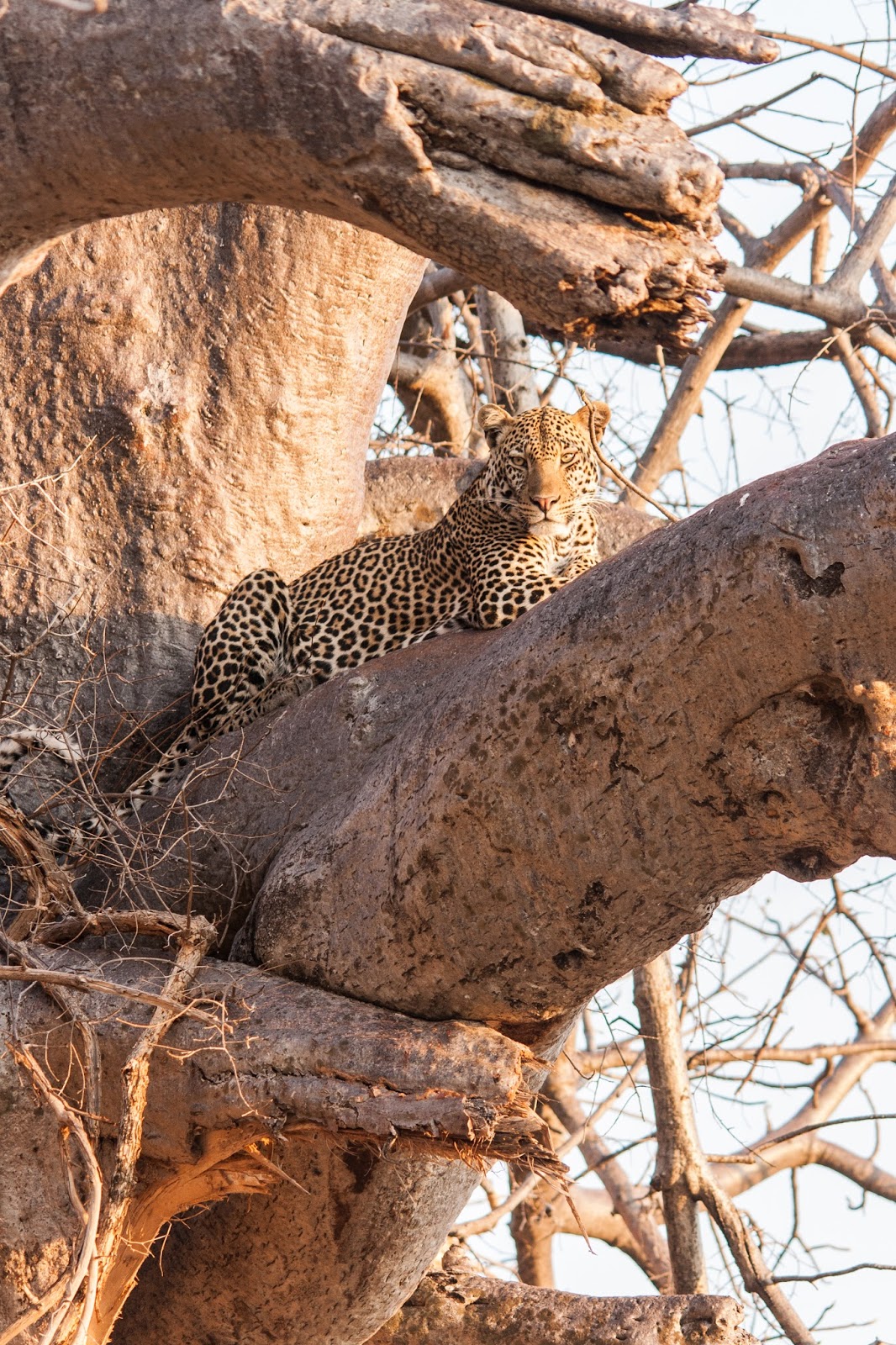
Male leopard on a Baobab tree 
- Ruaha National Park - Tanzania  
©Andrea Pompele All Rights Reserved
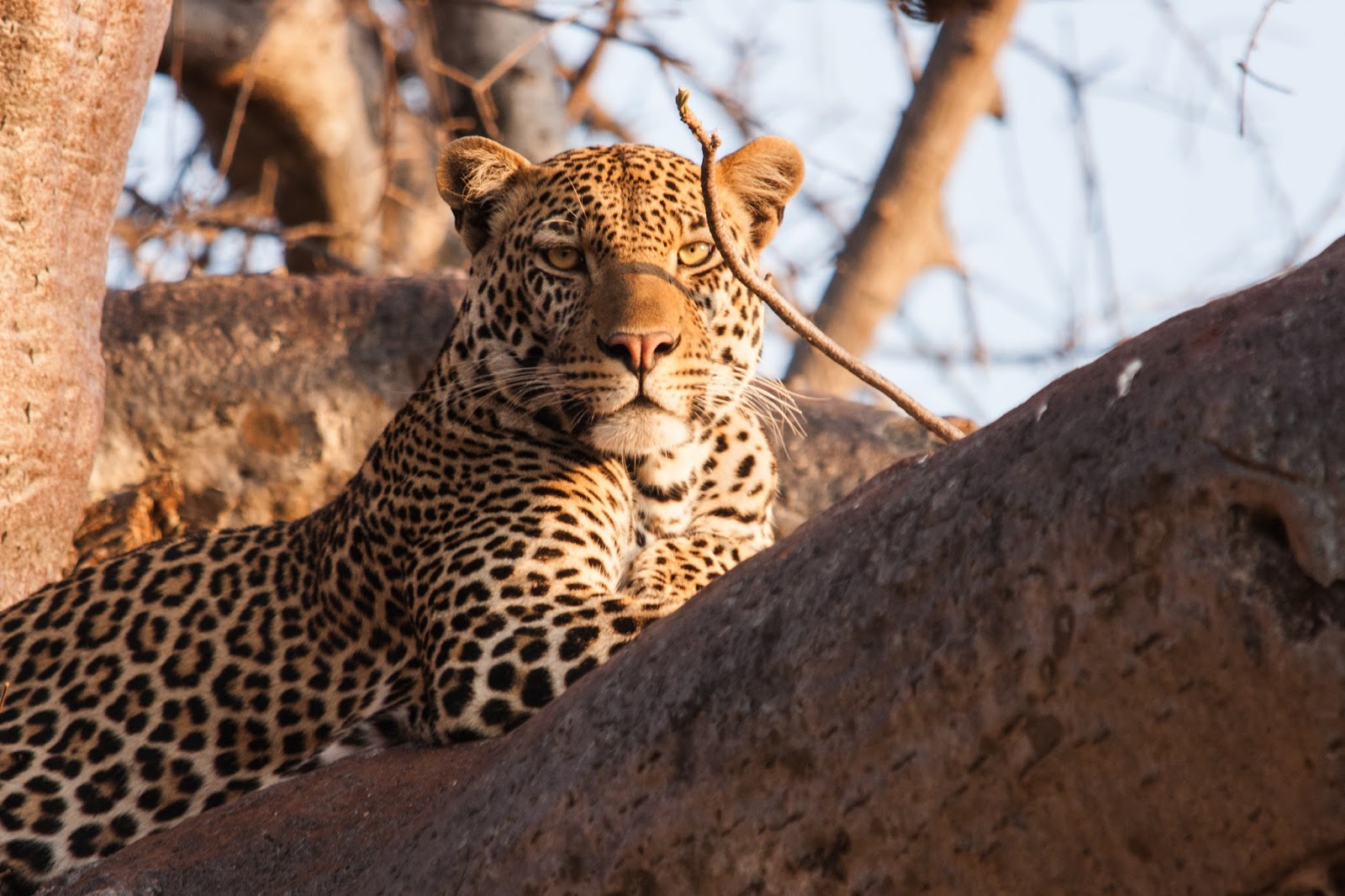
Questa mattina ho voglia di trovare i due leopardi, io e la mia collega prendiamo la macchina e andiamo a fare una perlustrazione intorno al campo, sono le 5:45 vediamo le tracce sulla strada che costeggia la collina e le seguiamo fino al punto panoramico dove di solito prendiamo l’aperitivo con gli ospiti, la strada è una salita non troppo lunga in mezzo ai cespugli che si apre in cima con 3 maestosi Babobab in fiore, la primavera è arrivata. Su uno di questi immensi alberi, il più grande in effetti, qualcosa si muove. Il maschio si sposta sul ramo più robusto e si sdraia a prendere i primi raggi del sole, parcheggiamo la macchina in mdo da avere la vista migliore e scattiamo delle foto, non c’è ombra della femmina. Spendiamo un’oretta circa a goderci la miglior luce possibile per fotografare il predatore e poi torniamo al campo a fare colazione. Non male come inizio di giornata vero?

Dicevo fa caldo, molto caldo. Il cielo è sereno e la mattinata scorre in fretta. L’umidità aumenta e si alza una leggera brezza che tutto sommato è piacevole, ti fa scordare per un attimo che ci sono 33 gradi la mattina. Durante l’ora di pranzo appaiono nuvole come panna montata nel cielo azzurro intenso, il paesaggio è incredibile. Bella giornata, penso, proprio bella.
male leopard ruaha tanzania mdonya
Male leopard on a Baobab tree - Ruaha National Park - Tanzania  ©Andrea Pompele All Rights Reserved
4:00 del pomeriggio, la radio ci annuncia l’arrivo di alcuni clienti, ci prepariamo ad accoglierli nel parcheggio sterrato. Il vento aumenta e le nuvole si ingrigiscono, fino a diventare nere e cariche di pioggia, tuoni in lontananza e fulmini annunciano la tempesta. Non penso pioverà nel campo, ieri alla fine ha piovuto sulle colline, probabilmente passerà sopra le nostre teste e scaricherà l’acqua sopra la grande scarpata. 

Mi sbaglio. E di brutto anche. 

La mia collega arriva con un giacchetta impermeabile e due ombrelli, io decido di andare a prendere la mia nella mia tenda, tempo di andare e tornare nel parcheggio, circa 3 min e comincia a piovere. 

La pioggia nella savana è una benedizione specialmente alla fine della stagione secca, ma quando piove, piove sul serio. 
storm sky ruaha tanzania mdonya
A big storm in the sky - Mdonya Old River Camp - Ruaha National Park - Tanzania  ©Rebecca Phillips All Rights Reserved

I clienti sono scesi dalle macchine e sono sotto la lounge tent si prendono giusto due gocce, io sono l’ultimo e devo finire di aiutare la guida e il driver a chiudere la macchina sui lati in modo che non ci piova dentro, in un minuto il parcheggio diventa un lago i sentieri che portano all’ufficio e alla zona comune diventano fiumiciattoli in piena, butto via le ciabatte che tanto non servono a niente e mi dirigo a alla dining tent dove la mia collega e lo staff stanno chiudendo i lati. 
Cominciamo a ridere come imbecilli mentre le secchiate di acqua in faccia piovono dal cielo, sono completamente fradicio ormai quindi che cavolo mi preoccupo a fare? 
I clienti sono nelle loro tende e non ci sente nessuno con tutti questi tuoni, allora una bella corsetta sotto la pioggia a celebrare l’arrivo dell’acqua non me lo toglie nessuno no? 

Fulmini a tutto spiano e lampi che illuminano a giorno per qualche secondo e un’idiota che corre scalzo in mezzo al campo.

Molto professionale.

Ma divertentissimo.

Se vi è piaciuto questo articolo allora potreste essere interessati a lasciare un commento, oppure a leggere anche questi altri:


ENGLISH VERSION

It is 7am. It's hot, it's very hot! The sun seems to burn the earth and the skin, and I seek the shade of the tent while eating breakfast outdoors every morning. There is not a breath of wind.

The temperature will reach 36 degrees in the shade of the office as I will later realize upon checking our mini weather station so under the sun there is a big difference, probably reaching 42 degrees. The humidity is low so it is still bearable.

The morning looks interesting I always get up early around 6 and I wake up even earlier at 5:30, it is still dark but the light filters up from the horizon and I do not need a torch. Lions are nearby and hear them roaring.

Last night two leopards, one male and one female, have crossed the camp. The guests had gone to bed early and my colleague also the Maasai have gone in their tents having wished me a good night after turning off the kerosene lanterns and they left me alone around the fire listening to the sounds of the night and watching the stars. It is a show that you cannot miss. I live in a wonderful place I have to take advantage of it, don’t you think? "Yeah, as if you do every day!" "Yes indeed, I cannot complain, taking in amazing scenes and always different" "precisely".

Return to us not deviate too much : the baboons who sleep on the trees in front of the common area of ​​camp began to launch alarm calls more and more loudly and continuously, the impala grazing in the dry river bed responded with many snorts, something frightened them and I know what: a leopard. I turned on the flashlight and pointed in the direction of the bushes, nothing, I changed direction, pointed the light in the course of the river and I saw two shinning orange eyes that looked at me, the animal moved and the silhouette is that of a cat. Ah, I told you that there was a leopard, hahaha! "Look better and please do not stop at first glance, I always say that to you" I watched him and I moved under the lounge tent anticipating the direction of his movements, he was crossing the camp, there was enough light to see him well and he headed for the tent n4, the one closest to me. To my surprise there were two leopards, a male and a female who followed him went straight to the waterhole to drink.

This morning I want to find the two leopards so me and my colleague we take the car and go searching around the camp. It’s 5:45 AM and we see the footprints on the road that runs along the hill and follow the tracks to the viewpoint where usually we take a drink with guests at sundown, the road is not too long and we climb up through the bushes to where there are 3 majestic Babobab at the top, we see they are blooming, spring has arrived! On one of these immense trees, the largest in fact, something moves. A male leopard moves to a more robust branch and lies down to take the first rays of the sun, we park the car to have the best view and we take photos, there is no female leopard around. We spend about an hour to enjoy the best possible light photographing the predator and then we return to camp for breakfast. Not a bad start to the day don’t you think?

As I said it's hot, very hot. The sky is clear and the morning passes quickly. The humidity increases and a gentle breeze rises that is very pleasant, makes you forget for a moment that it is 33 degrees in the morning. During lunchtime clouds are starting to appear as whipped cream in the deep blue sky, the scenery is amazing. Beautiful day, I think, simply beautiful.

4 pm, the radio announces the arrival of some guests, we prepare to welcome them in the car park. The wind picks up and the greying clouds becoming black and full of rain. Thunder and lightning rumble in distance announcing the storm. I don’t think it will rain in the area, yesterday it rained in the hills, probably it will pass over our heads and pour the water over the large escarpment.

I'm wrong. Seriously wrong.

My colleague comes with a waterproof jacket and two umbrellas, I decide to go and get mine from my tent, time to go back to the car park, about 3 minutes, and it starts to rain.

The rain is a blessing especially in the bush at the end of the dry season, but when it rains here, it seriously rains!

Guests climb down the cars and rush under the lounge tent just as two drops of water start to fall. I am the last one remaining as I have to finish to help guide and driver to close the car on the sides to keep out the rain. In a minute the car park transforms becoming a lake and the paths leading to the office and the common area become rivers in flood, I throw away the filp flops that are useless and I go to the dining tent where my colleague and staff are closing down the sides.

We begin to laugh like idiots while buckets of water splash in our faces raining down from the sky, we are now completely soaked but what the hell do I care?

The clients are in their tents and nobody can hear us with all the thunder, then a nice jog in the rain to celebrate the arrival of water, I did not refuse no?

Lightning illuminates the sky like daylight for a few seconds and an idiot is running around barefoot in the middle of the camp.

Very professional.

But funny.


If you like this post maybe you can read also these ones:


lunedì 10 agosto 2015

Africa, the mother land: Tanzania. SAFARI GUIDE LIFESTYLE

Fare la guida di safari non è solo un lavoro, è una scelta di vita.

Dik Dik - Madoqua Kirkii - Ruaha National Park - Tanzania -  ©Andrea Pompele All Rights Reserved
Sembra essere banalmente percepibile come scontato agli occhi di chi non ha fatto questa scelta, ma occorre essere consapevoli, non è una fuga, non è un rifiuto, non è nemmeno un’avventura fine a sé stessa, è un progetto.

Comporta sacrifici e tanto tanto studio, sappiatelo.

Sono una guida professionista certificata AFGA, African Field Guide Association, e imparo tutti i giorni qualcosa di nuovo. Ho intrapreso questa strada perché ho capito che nella vita bisogna fare quello che ci piace, non quello che gli altri si aspettano da noi. O peggio, quello che noi aspettiamo da noi stessi, proiettando aspettative erronee e fuorvianti per la nostra personale realizzazione e felicità.

Ok, fin qui tutto bene, ve l’ho già spiegato in altri articoli e momenti.

Yellow Baboon - Ruaha National Park - Tanzania -  ©Andrea Pompele All Rights Reserved
Passiamo alla parte pratica: come diavolo hai fatto a trasformare la tua vita in questa direzione? A parte la motivazione profonda che mi ha spinto, beh prima di tutto mi sono sbattuto parecchio per trovare la soluzione. Mi sono informato, ho scritto contattato e trovato corsi di formazione ed approfondimento che mi hanno dato la direzione. L'AIEA, Associazione Italiana Esperti d'Africa, mi ha dato la prospettiva dei corsi di formazione che mi avrebbero nel futuro dato la possibilità di accedere a questo tipo di vita. Nonostante io abbia una laurea in biologia ecologica con orientamento in etologia ed una laurea specialistica in Ecologia, non è stato affatto semplice superare gli esami, teorico e pratico in seguito, si può tranquillamente affermare che mi hanno fatto letteralmente un culo così! E meno male! Perché soltanto dopo, lavorando sul campo ho capito quanto la mia preparazione fosse necessaria e fondamentale. Con grande sorpresa mi sono ritrovato migliore di altri, più pronto, più competente e più capace di gestire le varie situazioni che possono capitare, sia dal punto di vista naturalistico che da quello organizzativo, di ospitalità, di gestione degli ospiti e degli imprevisti. Sono un genio? Sì lo ammetto sono migliore di tutti voi e vi mangio a colazione se osate sfidarmi. Ma per favore, che idiozia, no, sono esattamente come voi, solo sono preparato e motivato e questo fa la differenza. Ho naturalmente moltissimo da imparare e cresco professionalmente ma mi sono evoluto un po’. Sono manager di un campo tendato e sono responsabile delle guide e dei drivers, oltretutto sono diventato anche un trainer. Fico no? Certo ma non facile anzi. Prima di tutto bisogna sapere di cosa si parla per capire. Questa non è una vita facile (I LEONI RUGGISCONO DI NOTTE).
Lion's cub - Ruaha National Park - Tanzania -  ©Andrea Pompele All Rights Reserved

Tuttavia onestamente, è la migliore scelta che abbia fatto in vita mia. Ho imparato ed imparo tuttora un sacco di cose. Ogni giorno è diverso e mi regala esperienze incredibili. Ho superato alcuni limiti che avevo anche dopo essere diventato guida certificata e miglioro la mia conoscenza naturalistica in maniera concreta. Giro scalzo per il campo, all’inizio ero titubante e parecchio indispettito nel farlo, ma poi ho osservato, capito e fatto mia questa abitudine che ha il mio Boss. Ovviamente ci sono molte controindicazioni nel farlo: spine, sabbia, terra, polvere e insetti fastidiosi, ma superato il limite, basta prestare attenzione a quello che si fa e tutto risulta naturale. Cammino nel bush come se l’avessi sempre fatto, tra l’erba alta 4 metri circa, l’elephant grass (Pennistum purpureum), che si chiama così perché nasconde persino gli elefanti, con una certa attenzione a dove metto i piedi e a quello che si muove intorno a me. Non è difficile, non è pericoloso, se sai quello che fai e nello stesso tempo è incredibile se ci pensi su un attimo.
Me and an Elephant @ Mdonya Old River Camp - Ruaha National Park - Tanzania -  ©Andrea Pompele All Rights Reserved


Ho imparato a gestire gli elefanti. A piedi. Il campo è pieno di elefanti, entrano ed escono a loro piacimento giorno e notte, per brucare l’erba, strappare le foglie degli alberi e smuovere i tronchi per far cadere i frutti di Acacia tortilis di cui sono ghiotti. Spesso spaccano i rami e scorticano i tronchi, ogni tanto fanno cadere anche gli alberi. Si avvicinano e si possono osservare benissimo. Li stiamo identificando uno per uno e costruiamo loro una carte di identità da condividere con i ricercatori dello STEP (Southern Tanzania Elephant Project), abbiamo dato loro anche un nome per ciascuno ed è stupendo salutarli la mattina, il pomeriggio o la notte quando decidono di venire a trovarci.  Ho imparato a non avere paura di loro e a reagire correttamente ad una mock charge anche a piedi. I maschi adulti sono più semplici perché quando non sono in Musth, stato particolare di eccitazione sessuale il cui il testosterone aumenta vertiginosamente causando un’alterazione comportamentale significativa, “eccolo che ricomincia a sproloquiare in termini incomprensibili”, diventando molto aggressivi e pericolosi, sono calmi e rilassati, basta non bloccare loro la strada e lasciar loro lo spazio necessario per muoversi e puoi star loro anche a distanza ravvicinata. 
Elephant @ Mdonya Old River Camp - Ruaha National Park - Tanzania -  ©Andrea Pompele All Rights Reserved
Ho imparato dai Maasai come muovermi, senza correre assolutamente, senza mostrare paura e stando fermi e dritti, se caricano, spesso lo fanno solo per allontanarti quindi basta fare due o tre passi indietro in modo tranquillo e la cosa finisce lì. Altra cosa importante è mettere un ostacolo tra noi e loro, tipo un tronco e la situazione è sicura. Ovviamente bisogna sempre valutare il contesto e l’animale che si ha di fronte, anche loro hanno il loro carattere ed esistono quelli più calmi e tranquilli e quelli più agitati. Mad Max è uno di questi, l’abbiamo chiamato così proprio per la sua diffidenza e una certa propensione al nervosismo. Con lui nel campo bisogna stare all’occhio e muoversi in maniera prudente. Charlie, Louis e Sikiu Mbovu sono decisamente più amichevoli, soprattutto quest’ultimo che birichino com’è ha deciso di spaccare i tubi dell’acqua per bere direttamente l’acqua pulita, con una certa simpatia per la mia doccia. Ogni giorno più o meno arriva e puntualmente ne combina una delle sue. Ma è quello a cui mi posso avvicinare più facilmente, l’altro giorno mentre lo riprendevamo con il cellulare ha toccato lo schermo con la proboscide, giusto per ricordarci che non gliene importa nulla se lo sgridiamo, lui fa quello che gli pare, è un pachiderma adulto di 6 tonnellate, vuoi che si impressioni per un “omiciattolo” di soli due metri? Con i giovani maschi è un po’ diverso, sono meno a proprio agio quindi più nervosi, abbiamo Kino e Mitz ultimamente, il primo è adulto e ha la sua personalità il secondo è più giovane ed impara dagli altri. Mi piace averli nel campo, li ho chiamati con i nomi dei miei due fratelli, eh beh la famiglia innanzitutto.
Elephant @ Mdonya Old River Camp - Ruaha National Park - Tanzania -  ©Andrea Pompele All Rights Reserved
Sono particolarmente felice di avere alcuni gruppi di elefanti che vengono a trovarci, con tanto di piccoli di diverse età, è un buon segno e fa sempre piacere vedere questi cuccioli giocare e tentare di caricare impala, francolini e scimmie per dimostrare che sono capaci anche loro, nonostante siano buffissimi da osservare, soprattutto quando inciampano o si spaventano quando i francolini si alzano in volo e si guardano attorno sperando di non essere stati visti perché hanno fatto una figuraccia e si rifugiano tra le gambe delle madri. Con le femmine nel campo però è tutta un’altra cosa. Con queste non si scherza affatto, proteggono i loro piccoli da ogni cosa, noi compresi, e caricano, senza fermarsi. Le sorelle più grandi non sono da meno, quindi molto meglio star loro alla larga.
Me and an Elephant - Ruaha National Park - Tanzania -  ©Andrea Pompele All Rights Reserved

Se vi è piaciuto questo articolo allora potreste essere interessati a lasciare un commento, oppure a leggere anche questi altri:

LE NOTTI SILENZIOSE SONO LE NOTTI MIGLIORI

I LEONI RUGGISCONO DI NOTTE

IL VIAGGIO

ENGLISH VERSION
Being a safari guide is not just a job, it’s a lifestyle

It seems to be perceived as trivially obvious for those who have not made this choice, but you must be aware it is not an escape, it is not a denial, it's not even an adventure in itself, it’s a project
.
It involves sacrifices and so much study, this has to be known.

I am a professional safari guide certified AFGA, African Field Guide Association, and I learn something new every day. I started this project because I realized that in life you have to do what you like, not what the others expect by you. Or worse, what we expect of ourselves, projecting erroneus expectations which become misleading for our personal fulfillment and happiness.

Ok, so far so good, I have already explained this in other articles and posts.

Let's move on to the practical part: how the hell did you transform your life in this direction? Aside from the motivation that prompted me, well first of all I had to overcome a lot to find the solution. I informed myself, I wrote emails, contacted people and found some training that gave me the direction. The AIEA, Associazione Italiana Esperti d'Africa, has given me the perspective of the training courses that they would in future given  me the opportunity to access this kind of life. Although I have a degree in ecological biology  with orientation in ethology (behaviour biology) and a degree in Ecology, it was not easy to pass exams, theoretical and practical,  you can safely say that I was put through my paces! And thank goodness! Why only after working in the field I realized how my preparation was necessary and essential. With great surprise I found myself better than others, more ready, more competent and better able to handle the various situations that can happen, both from the naturalistic point of view and from that organization, hospitality, guest management and other challenges. I'm a genius? Yes I admit I'm better than all of you and I’d kick your butt if you dare challenge me. But please, that idiocy, no, I'm just like you, only I’m prepared and motivated and that makes the difference. Obviously I have a lot to learn and grow professionally but I have evolved a bit. I’m a  manager of a tented camp and I’m responsible for guides and drivers, plus I became a trainer. Cool yes? But certainly not easy indeed. First you need to know to understand what it's about. This is not an easy life (LIONS ARE ROARING AT NIGHT).
However, honestly, it is the best choice I've made in my life. I learned and I’m still learning a lot of things. Every day is different and gives me incredible experiences. I passed some limits that I had even after becoming certified guide and improve my knowledge of nature in a concrete way. I walk around barefoot into the camp, at first I was hesitant to do so and quite worried, but then I have observed, understood and made my habit that my Boss normally do. Obviously there are many drawbacks in doing so: thorns, sand, soil, dust and annoying insects, but crossed the line, just pay attention to what you do and everything is natural. I walk in the bush as if I had always done, in the tall grass about 4 meters, the elephant grass (Pennistum purpureum), which is so called because it hides even the elephants, with some attention to my steps and what moving around me. It’s not difficult, it’s not dangerous, if you know what you do and at the same time it's amazing if you think about it for a moment.

I learned how to manage elephants. On foot. The camp is full of elephants, moving in and out at will day and night to graze the grass, tearing the leaves of the trees and move the logs to bring down the fruits of Acacia tortilis which are greedly eaten. Often they split branches and strip out the trunks, sometimes they brake even trees. They can be approached and can be observed very well. We are identifying them one by one and we create identity cards to share with researchers of  STEP (Southern Tanzania Elephant Project), we gave a name to each one of them and it is wonderful to greet them in the morning, afternoon or night when they decide to come visit us. I learned not to be afraid of them and react properly to a mock charge on foot. Adult males are easy because when they are not in Musth, a particular state of sexual excitement where testosterone increases dramatically causing significant behavioral alterations, "here he begins to rant in incomprehensible terms", becoming very aggressive and dangerous, they are calm and relaxed, just without blocking them off and leave them enough space to move around and can keep up with them even at close range. I learned from the Maasai how to move and absolutely not run away, without showing fear and standing still and straight, if they charge, they often do so just to put you away so you have to make two or three steps back so quiet and it ends there. 

Another important thing is to put a barrier between us and them, like a log, and the situation is safe. Obvoiusly you should always evaluate the context and the animal that is in front of you, they have their own character and there are those very calm and quiet and other more nervous. Mad Max is one of these ones, we called him so because of his mistrust and a certain tendency to nervousness. With him around you have to move in a prudent manner. Charlie, Louis and Sikiu Mbovu are much friendlier, especially the latter one that fluffy decided to split the water pipes to drink straight clean water, with some sympathy for my shower. Every day more or less he comes and makes some troubles. But it is one to which I can approach more easily, one day while we were filming him with the phone he has touched the screen with his trunk, just to remind us that he doesn’t care if we scold him, he does what he wants, he is an adult pachyderm weighing 6 tons, do you think he could be impressed by a 2 meters tall "little man"? With young males is a bit different, they are less confident and more nervous, we have  Kino and Mitz around, the first is an adult and has his personality whilst the second is younger and is learning from others. I like to have them in camp, I called them with the names of my two brothers, well family first.

I am particularly happy to have some groups of elephants who come to visit us with little calves of different ages, it’s a good thing and it's always nice to see these calves play and try to charge impalas, francolins and monkeys to show that they are capable too despite being very funny to watch, especially when they stumble or get scared when francolins take off and look around hoping not to be seen because they have been made a fool of and take refuge between the legs of the mothers. With females in camp, however, it’s a different thing. You do not mess with them at all, they protect their calves from everything, including us, and they really charge, without stopping. The older sisters are no different, so much better to be careful.


If you like this post maybe you can read also these ones:

SILENT NIGHTS ARE THE BEST NIGHTS

LIONS ARE ROARING AT NIGHT

THE TRIP

THE END OF AN ADVENTURE


lunedì 22 giugno 2015

Africa, the mother land: Tanzania. LE NOTTI SILENZIOSE SONO LE NOTTI MIGLIORI/SILENT NIGHTS ARE THE BEST NIGHTS

Di notte tutto assume un’altra forma, un altro significato.


Sunset @Mdonya Old River Camp - Ruaha National Park - Tanzania -  ©Andrea Pompele All Rights Reserved 
Anche e soprattutto nel bush.
La notte cala improvvisamente, in un quarto d’ora, venti minuti al massimo ed è buio pesto. Ti ritrovi in un posto completamente diverso da quello a cui sei abituato, con regole diverse, abitanti diversi e ti rendi rapidamente conto che sei una nullità nelle tenebre.

Le notti che partono silenziose sono le migliori, riservano sorprese improvvise. Noi ci si annoia mai e presto si realizza quanto queste siano pericolose. Non si può camminare in giro per il campo da soli di notte. Primo perché non ci sono luci, ad eccezione delle lampade a kerosene davanti alle tende, secondo perché questa è molto popolata e bisogna essere accompagnati sempre da un maasai fino alla propria tenda. Potrebbe esserci un elefante o più che tranquillamente strappa le foglie da un ramo o dall’erba, oppure qualcos’altro. non si sa mai.

 Genet cat camera trap - Ruaha National Park - Tanzania -  ©Andrea Pompele All Rights Reserved 
Abbiamo diversi amici notturni che ci vengono a fare visita quando cala la notte, c’è un topolino che si presenta in ufficio sempre alla stessa ora, dal soffitto di paglia scende fino ad incontrare un ramo e sale rapidamente sul tronco dell’albero di acacia di fianco a noi. Si chiama Gerald the mouse. Abbiamo una genetta che vive nel campo, si aggira furtiva di notte e la si può incontrare anche la mattina presto, una sera davanti al fuoco l’abbiamo vista salire sull’albero di fronte a noi. Si chiama Janet, la Genetta. Ok la fantasia non è il nostro forte, va bene. Scusate.

Spesso durante la notte sento camminare sopra il tetto della mia tenda e far cadere delle cose, mi sono chiesto le prime volte cosa poteva essere, poi ho visto due luminosi occhi gialli fissare la mia torcia ed ho subito realizzato che dalla posizione frontale e dalla grandezza doveva per forza trattarsi di un primate: un Galagone, meravigliosa proscimmia strepsirrina della famiglia dei galagidi, che abita gli alberi del campo, ce ne sono parecchi in giro e si nascondono tra il fogliame. Da primatologo non posso che osservarli con un certo interesse anche se magari la smettessimo di svegliarmi sempre passeggiando sulla tenda, non è che mi offendo, va bene eh?


Spotted Hyena camera trap - Ruaha National Park - Tanzania -  ©Andrea Pompele All Rights Reserved 
Ci sono iene che attraversano il campo e cercano costantemente di accedere alla cucina per divorare qualcosa, girano fra le tende e il suono della loro voce è piacevole nonostante non siano esattamente gli animali più belli da vedere, hanno però il loro fascino. Una notte si aggiravano davanti alla mia tenda e mi hanno svegliato di soprassalto per la loro famosa “risata” di gruppo, fortissima e vicinissima. Qui le iene sono per lo più scavengers, cioè pulitori più che predatori, si cibano di carcasse e di tutto quello che trovano piuttosto che cacciare, dipende dalla quantità di leoni presenti nella zona, che è piuttosto elevata, e modificano le loro abitudini alimentari per trarne il profitto maggiore. Addentano e masticano di tutto, compresa la camera trap che abbiamo fissato ad un albero, che mostra chiari segni di sofferenza dovuti all’attenzione di una iena particolarmente interessata. Una notte abbiamo fissato la fotocamera e abbiamo notato che dalle foto la prospettiva cambiava, l’ha girata con i denti e l’ha orientata in modo diverso, devo dire che la visuale è migliorata parecchio anche, si vede che l’inquadratura non le piaceva e ha cambiato visuale. Altro che direttori della fotografia.

Young female leopard camera trap - Ruaha National Park - Tanzania -  ©Andrea Pompele All Rights Reserved 
Abbiamo ovviamente i leoni che ruggiscono la notte e si aggirano per il campo, ma  non sono gli unici predatori che abbiamo intorno, ce ne sono di più piccoli, ma altrettanto temibili. Lo zibetto ad esempio, o civetta africana (Civecttitis civetta), lo so che state pensando ad un uccello, ma no non si tratta di quello, bensì di un viverride piuttosto comune. “un viverride? E che cavolo è?” assomiglia ad un orsetto lavatore tanto per prenderla piuttosto a spanne, Dio se mi sentisse il prof di zoologia mi strapperebbe la laurea…

C’è il Serval o Gattopardo (Leiptalurus serval) che ha abitudini sia notturne che diurne, piuttosto comune da queste parti, un felino dalle gambe lunghe ed affusolate molto elegante, dal manto maculato, spietato predatore di uccelli.

C’è poi il felino, anzi pantherino, più elegante e bello di tutti, il leopardo. La nostra camera trap ne ha ripreso un esemplare femmina mentre beveva alla pozza, ma non è l’unico leopardo residente che abbiamo in zona, c’è Fundi, il maschio dominante che abita nel campo, o meglio che decide di farsi vedere solo quando interessa a lui ovviamente. Una meraviglia da osservare.

Se vi è piaciuto questo articolo allora potreste essere interessati a lasciare un commento, oppure a leggere anche questi altri:

I LEONI RUGGISCONO DI NOTTE

IL VIAGGIO

LA FINE DI UN'AVVENTURAl


Sun Down - Ruaha National Park - Tanzania -  ©Andrea Pompele All Rights Reserved 


ENGLISH VERSION

At night everything takes on another form, another meaning.

Especially in the bush.
Night falls suddenly, in a quarter of an hour, twenty minutes at the maximum and then it is pitch dark. You find yourself in a completely different place from what you're used to, with different rules, different habitants and you realize quickly that you are a nothing in the darkness.

The nights that start out quiet are the best nights, they are the nights that possess sudden surprises. We never get bored and soon realizes how dangerous they are. You can not walk around the area alone at night. First, because there are no lights except for kerosene lamps in front of the tents, and secondly because it’s very populated and you must always be accompanied by a Maasai up to your tent. There might be an elephant quietly ripping leaves from a branch or grass, or something else. You never know.

We have several friends that come to visit us at night, there is a little mouse who is in office , climbing from the thatched ceiling down until it meets a branch and rises rapidly to the trunk of the acacia next to us. We called him Gerald the mouse. We have a Genet living in the camp, she goes around furtively at night and you can also spot her in the early morning.  One evening around the fire we saw her climb the tree in front of us. Her name is Janet, the Genet. Ok imagination is not our best issue, ok. Sorry.

Often at night I hear something walking on the roof of my tent and dropping things, I wondered what could it be the first few times, then I saw two bright yellow eyes staring my flashlight and I quickly realized from the front position and size that it was bound to be a primate: a bushbaby, wonderful prosimian strepsirrina family of galagidi who inhabit the trees, there are several around hiding among the foliage. As a primatologist, I can observe them with interest but please maybe you can stop walking on the roof of my tent!

There are hyenas crossing the camp and constantly seeking access to the kitchen to eat something, running between the tents and the sound of their voice is pleasant although they are not exactly the most beautiful animals to see, however they have their charms. One night they were loitering in front of my tent and I woke up because of their famous "laughter" of the group, strong and close. Here hyenas are mostly scavengers, ie cleaners rather than predators, feeding on carcasses and anything they find rather than hunting due to the amount of lions in the area, which is quite high, and they change their eating habits to derive greater profit. Snapping and chewing at everything, including the camera trap which we set up in a tree which showed clear signs of distruction due to the particular attention of an overly curious hyena. One night we checked the camera and noticed that the perspective of the photos had changed, he had turned it with his teeth and oriented it differently. I must say that the view was improved a lot, we see that he did not like the angle of the shot so he changed it. What a director of photography!

We have of course the lions roaring at night and roaming the camp, but they are not the only predators that we have around. The other predators are smaller but equally as dangerous. Civet for example, African Civet Cat (Civecttitis civetta), a rather common viverrid. "A viverrid? And what the hell is? "Looks like a raccoon just to take it easy, OMG If my Professor of Zoology would hear me he will burn my graduation ...

There is also the Serval (Leiptalurus serval) that habits both day and night, quite common in these parts, a very elegant and slender cat with long legs, a spotted coat and a ruthless predator of birds.

Then there is a cat, indeed pantherino, the most elegant and beautiful of all, the leopard. Our camera trap has captured a female specimen as she drank from the pool, but she is not the only resident leopard that we have in the area. There is Fundi, the dominant male who lives in the camp, or rather he decides to show himself only when he’s interested in doing so, obviously. A wonder to behold.

If you like this post maybe you can read also these ones:

LIONS ARE ROARING AT NIGHT

THE TRIP

THE END OF AN ADVENTURE


martedì 16 giugno 2015

Africa, the mother land: Tanzania. IL LEONI RUGGISCONO DI NOTTE/ LIONS ARE ROARING AT NIGHT

Vivere nel bush non è facile


African Elephants in the Bush - Ruaha National Park - Tanzania -  ©Andrea Pompele All Rights Reserved 
Sappiatelo.

Non è una cosa per tutti, non è comodo, non è semplice, manca l’elettricità dopo una certa ora, non hai tutte le scontate o inutili, dipende dal punto di vista ovviamente, comodità che avresti a casa tua.
Ma poi casa tua? Che cosa diavolo è? È dove hai le tue radici? Direi di sì. È dove sei cresciuto? Può darsi. È dove stai bene? Sicuramente. Ecco direi l’ultima delle opzioni per me. Io nel bush ci sto bene, ma proprio bene, anzi, ci sto da Dio.

Wild dagga - Leonotis nepetifolia - Lion's ear - 
Ruaha National Park - Tanzania -  ©Andrea Pompele All Rights Reserved
Non ho l’elettricità è vero, ho le lampade a kerosene e le lanterne ricaricabili, non ho lo scarico del lavandino, l’acqua la tengo in un secchio e poi la riutilizziamo oppure l filtriamo per altri scopi, ovvio ho il bagno con il water e lo scarico diretto, ho la doccia con l’acqua calda, la scaldiamo con i pannelli solari e bisogna avere l’accortezza di farsela la sera, perché la mattina può essere piuttosto freschino, ma me la faccio all’aperto, sotto le stelle. Ho uno specchio con il quale farmi la barba, ma è piccolo mica come quello enorme che avevo in Italia, e mi basta, anche se la barba non la faccio mai. Ho una tenda ampia, confortevole, con tutto lo spazio necessario, un letto matrimoniale bello grosso, un mobiletto e un armadio, un baule, una scrivania, una sedia, tutto di legno, e una candela se voglio leggere di notte, oppure una lampada frontale. Ho tutto l’essenziale per vivere comodamente, ma io sono uno dei due manager, le tende degli ospiti Mdonya Old River Camp sono tutta un’altra storia. Molto meglio.
African Elephant next to the Dining Tent @Mdonya Old River Camp -
Ruaha National Park - Tanzania - 
 ©Andrea Pompele All Rights Reserved 
I leoni ruggiscono di notte. 

Sono circondato dai leoni, ogni notte fanno sentire la loro voce ruggendo nelle tenebre. 

È una sensazione a cui si fa l’abitudine, non ci si scompone più di tanto. A volte li senti lontani, altre volte sono più vicini, una notte mi sembrava fossero dietro la mia tenda ed in effetti il giorno dopo ho trovato le tracce che andavano in direzione della cucina del campo, sono passati, hanno dato un’occhiata e se ne sono andati. Tutto regolare. “tutto regolare? Ma sei fuori? Ti sembra una cosa normale? Sapevo che eri originale, ma non mi sembra tu sia tutto a posto” come dicevo prima ci si fa l’abitudine. Nel campo di giorno non li ho ancora visti, la stagione secca è cominciata, ma nel vecchio corso del fiume Mdonya, il ramo ormai secco, cioè dove è situato il campo, la vegetazione è ancora rigogliosa e i leoni sono intorno a noi ma è ancora difficile vederli. In alcune zone l’erba è alta 4 metri, il che rende difficile gli avvistamenti dei predatori. E non solo di quelli. Arriveranno anche nel campo, più avanti nella stagione, per trovare ombra e ripararsi sotto gli alberi. Certo mi rendo conto che non è per tutti usuale avere i leoni in “giardino”, ma d’altra parte non sono gli unici visitatori del campo.

African Elephant in the Bush - Ruaha National Park - Tanzania -  ©Andrea Pompele All Rights Reserved 
Ci sono gli elefanti. 

Pressoché ogni giorno gli elefanti entrano ed escono dal campo a loro piacimento, ce ne sono tanti ed è una cosa meravigliosa poterli osservare da vicino mentre strappano l’erba ancora verde, scuotono gli alberi, spaccano a volte i rami, e camminano tranquillamente davanti all’ufficio. Sì dal mio ufficio, aperto, sotto un’acacia enorme, vedo gli elefanti passeggiare. Impagabile. Molti di loro hanno un nome, sono stati identificati e sono ospiti abituali, altri sono nuovi ed altri ancora si devono ancora vedere, magari sono nelle vicinanze, verranno a trovarci tra un po’.  Spesso di notte passano vicino alle tende e l’altra notte li sentivo che strappavano le tenere foglie degli arbusti che ho intorno alla tenda, ne avevo uno sulla sinistra e uno sulla destra, e guarda caso dovevo alzarmi e andare in bagno…privacy annullata da un elefante. Perfetto no?

Vervet Monkey (Chlorocebus pygerythrus)  -
 Ruaha National Park - Tanzania -  ©Andrea Pompele All Rights Reserved 
Di giorno si possono vedere Kudu maggiori (Tragelaphos strepsiceros), zebre, giraffe, impala, bushbucks, cercopitechi verdi e babbuini gialli aggirarsi tra le tende e salire sugli alberi. A volte entrano anche in ufficio, come l’altro giorno che sono andato un minuto in cucina per parlare con lo staff e mentre tornavo ho trovato un cercopiteco seduto sulla mia sedia davanti al computer. Spero non abbia mandato qualche e mail attraverso il mio account, che usi il suo checcavolo! Ci sono un sacco di uccelli che popolano gli alberi, se siete interessati al birdwatching questo è il posto che fa per voi, con 571 specie di uccelli presenti nel Parco. Alcuni hanno voci meravigliose e canti stupendi, altri suoni gracchianti e fastidiosi, altri ancora sono piuttosto innervosenti, soprattutto se cantano alle 5 del mattino su un ramo dell’albero che hai di fianco alla tenda, che mi funge perciò da sveglia personale, il White Browed Robin Chat poi è incredibile: parte piano in un crescendo sempre più forte. Perciò tutte le mattine sono costretto ad alzarmi presto. Per me sono le 5, per voi le 4. Ci sono rapaci che volteggiano, come bateleur e long crested eagle, tawny eagle e martial eagle, granivori, insettivori, generalisti, migratori, insomma di tutto. “ e rieccolo che comincia a parlare in modo incomprensibile: grani-che? Spiegati meglio, please!” uccelli che si cibano di semi. “ah ecco!”. 
Nest in the tall grass - Ruaha National Park - Tanzania -  ©Andrea Pompele All Rights Reserved 
Ci sono insetti, come le splendide mantidi religliose che si posano sugli steli d’erba alta e fitta, dalle forme diverse tutte perfettamente mimetizzate, ci sono una quantità enorme di farfalle, di ogni forma e colore che volano nei prati antistanti le tende, l’area comune dove c’è la lounge tent e la dining tent, è uno spettacolo fermarsi ad osservare la loro delicatezza e bellezza. Rettili, va beh non entriamo nel dettaglio che vi spaventate inutilmente, anfibi, come la rana che ho trovato nella lounge tent ieri mattina, nascosta sotto una poltrona che cercava di ripararsi tra la sabbia per proteggersi dal sole incombente e spietato. Una simpatica piccola ranocchia, la grey foam-nest tree frog (Chiromantis xerampelina), l’ho presa in mano e l’ho portata tra l’erba in una zona umida, la mia spericolata ed imprudente amica.

Se vi è piaciuto questo articolo allora potreste essere interessati a lasciare un commento, oppure a leggere anche questi altri:

IL VIAGGIO
ENGLISH VERSION


Living in the bush is not easy.

You have to know this.

It's not for everybody, it is not comfortable, it is not easy, there is no electricity after a certain time, without the discounted or unnecessary, depending on your point of view, of course, comforts that you would have at home.

Your home? What is your home? Is it where you have your roots? I would say yes. It's where you grew up? Maybe. Is it where you feel good? Definitely. For me it is the last option, here in the bush, I’m fine, in fact, I’m really good.

I have no electricity which is true, instead I have the kerosene lamps and rechargeable lanterns, I don’t have a sink with a drain,  we keep the water in a bucket and then we filter to reuse it or for other purposes. Of course I have a watercloset with water and direct discharge, a hot water shower, heated by solar panels which you must be careful to take it in the evening, because the mornings can be quite chilly and there is no hot water, however I have my shower outdoors under the stars. I have a mirror in order to shave, but it is small not huge like what I had in Italy, and it is enough for me, although I don’t shave ever. I have a large, comfortable tent, a nice big double bed, a cabinet and a wardrobe, a chest, a desk, a chair, all made of wood, and a candle if I want to read at night, or a front lamp . I have all the essentials to live comfortably, but I am one of two managers, the tents of the guests Mdonya Old River Camp are a different story. Much better.

The lions roar at night. I am surrounded by lions, every night I hear their voices roaring in the darkness. It's a feeling that you do get used to, you are in fact unperturbed. Sometimes you hear them far away, other times they are closer, one night I felt like they were behind my tent and in fact the next day I found tracks that went in the direction of the camp kitchen,  they have walked passed, taken a look and then they have gone. Nancy. "Nancy? But you're freaking out? It seems to you a normal thing? I knew you were the original, but I don’t think you're all right "as I said before it becomes a habit, I have not seen them in the camp yet. The dry season has begun and on the bank of the Mdonya river, along the old river course which has now dried out, in which the tented camp is located the vegetation is still lush and the lions are around us but it is still difficult to see them. In some areas the grass is 4 meters high making it difficult to have  sightings of predators. And not just those ones. They will arrive in the camp later on in the season, to find shade and shelter under the trees. Of course I realize that it is not usual to have lions in your " private garden", but on the other hand they are not the only visitors of the camp there are also the elephants.

Almost every day the elephants come and leave the camp and there are many elephants. It is a wonderful thing to observe them closely while they are ripping up the still green grass, shaking the trees, sometimes splitting branches, and walking quietly in front of the office. Yes my office is open and located under an huge acacia tree from where I can see elephants walking past. Priceless! Many of them have names, as they have been identified and they are regular guests, others are new and still others have not been seen yet but hopefully they are nearby and they will come to visit us in a while. Often at night they pass next to the tents and the last night I heard them tearing at the tender leaves of the shrubs around my tent, I had one on the left and one on the right and I had to get up to go to the bathroom ... privacy canceled by an elephant. Perfect don’t you think?

During the day, you can see Kudus (Tragelaphos strepsiceros), zebras, giraffes, impalas, bushbucks, vervet monkeys and yellow baboons wandering among the tents and climbing trees. Sometimes they come inside the office, like the yesterday I went into the kitchen for a minute to talk with the staff and when I returned I found a monkey sitting in my chair in front of the computer. I hope it has not sent any e-mails through my account but that it used its own! There are a lot of birds that inhabit the trees, if you are interested in birdwatching this is the place for you with 571 species of birds found in the park. Some have wonderful voices and make beautiful sounds, some make crackling sounds and others annoying sounds, especially if singing at 5am on a branch of the tree next to your tent. I therefore have as a wake-up the White browed Robin Chat which is incredible: he starts slowly and then gets louder and louder. So every morning I am forced to get up early. For me it is 5 am, for you the 4am. There are raptors circling, such as bateleur and long crested eagle, tawny eagle and martial eagle, granivores, insectivores, generalists, migratory birds, in short, everything. "Here it’s again and begins to speak in an incomprehensible way: grains-what? Explain yourself, please! "Birds that feed on seeds. "Ah!". There are insects, such as the splendid praying mantis that are placed on the stems of tall and dense grass, with different shapes all perfectly camouflaged. There are a huge amount of butterflies of all shapes and colors flying in the grasses in front of the tents and the common area, where the lounge tent and dining tent are, and it is a show stopping sight where you can observe their delicacy and beauty. Reptiles, okay let's not go into details so that you  don’t get unecessarily scared, amphibians, like the frog that I found yesterday morning in the lounge tent, hidden under a chair trying to shelter from the sand to protect hiself from the looming and ruthless sun. A funny little frog at that so I picked it up and took it in the grass in a wetland, my reckless and imprudent friend.


If you like this post maybe you can read also these ones:
THE TRIP

THE END OF AN ADVENTURE